Best Air Compressor Brands in 2026: DEWALT vs Makita vs Ingersoll Rand vs Quincy
Choosing an air compressor is not only about tank size, PSI, or horsepower. The brand of air compressor can also affect build quality, available features, service support, replacement parts, noise level, and long-term value.
With so many options available, it can be difficult to know which manufacturer is right for your application. A homeowner looking for a compact compressor has different requirements from a contractor running pneumatic tools every day. Likewise, an automotive shop or industrial facility may need a completely different class of machine.
In this guide, we compare several popular air compressor brands in 2026, including DEWALT, Makita, Ingersoll Rand, Quincy, California Air Tools, and Campbell Hausfeld. Instead of choosing one brand as the winner for everyone, we’ll explain where each brand makes the most sense.
Best Air Compressor Brands in 2026 at a Glance
There is no single best compressor brand for every application. The right choice depends on your required CFM, working PSI, portability, noise level, duty cycle, power source, and budget.
| Brand | Best For | General Position |
|---|---|---|
| DEWALT | Contractors, garages, job sites | Portable and versatile |
| Makita | Job sites, woodworking, portable work | Portable and professional |
| Ingersoll Rand | Automotive and professional shops | Professional/heavy-duty |
| Quincy | Workshops and demanding applications | Professional/heavy-duty |
| California Air Tools | Quiet home and garage use | Quiet portable |
| Campbell Hausfeld | DIY and general home use | Budget-friendly |
Current industry comparisons similarly place DEWALT, Makita, and Campbell Hausfeld more toward consumer/prosumer applications, while Ingersoll Rand and Quincy are more strongly associated with professional equipment.
1. DEWALT Air Compressors
DEWALT is one of the most recognizable names for contractors and tradespeople. Its compressor lineup includes compact portable models as well as larger units designed for garages, workshops, and job-site applications.
One of the biggest advantages of DEWALT is versatility. A contractor may want a relatively portable compressor for framing, remodeling, trim work, or general pneumatic tools, while a garage user may prefer a larger tank for automotive applications.
Best for
- Contractors
- Remodeling
- Framing and finish work
- Home garages
- General pneumatic tools
- Buyers already using DEWALT equipment
Advantages
DEWALT compressors are widely recognized for portable and job-site applications. Depending on the model, buyers can find different tank sizes, power configurations, and airflow capabilities.
If you’re searching for a portable air compressor for construction, DEWALT is one of the brands worth comparing.
Potential drawback
Not every DEWALT compressor is designed for continuous heavy-duty industrial operation. You should always compare the actual CFM, PSI, duty cycle, and application requirements rather than buying based on the brand name alone.
2. Makita Air Compressors
Makita is another popular choice for contractors and professionals who need a portable compressor.
The brand is particularly well known for compact compressors designed around portability and job-site use. Some Makita models are also attractive to users who want a relatively durable compressor without moving up to a large stationary machine.
Best for
- Contractors
- Finish carpentry
- Framing
- Remodeling
- Portable job-site work
- Users who prioritize portability
Makita is often included in comparisons of portable compressors alongside DEWALT and other professional tool brands. Current comparisons also highlight Makita’s portable and job-site positioning.
Makita vs DEWALT Air Compressor
If you’re comparing Makita vs DEWALT air compressors, don’t focus only on horsepower.
Instead, compare:
- CFM at your working PSI
- Tank size
- Compressor weight
- Noise level
- Recovery time
- Power requirements
- Portability
- Warranty and service
- Your pneumatic tools
For a contractor who already owns cordless tools from one ecosystem, staying with the same brand can also be convenient.
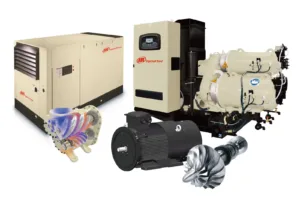
3. Ingersoll Rand Air Compressors
Ingersoll Rand occupies a different position from many consumer-oriented compressor brands.
The company has a broad range of professional and industrial compressor equipment, making it a strong option for users who need more than occasional DIY performance.
Professional comparisons frequently place Ingersoll Rand among the leading choices for automotive shops, fabrication, commercial applications, and heavy-duty tools.
Best for
- Automotive shops
- Professional workshops
- Fabrication
- Heavy pneumatic tools
- Commercial applications
- Users who need higher output
Why consider Ingersoll Rand?
For professional users, airflow and long-term serviceability can be more important than simply finding the lowest purchase price.
If your compressor will run frequently, compare the pump design, CFM, duty cycle, service requirements, and availability of replacement parts.
Ingersoll Rand vs Quincy
The Ingersoll Rand vs Quincy air compressor comparison is particularly relevant for professional buyers.
Both brands offer equipment aimed at demanding applications, but the right choice depends on the exact compressor, required airflow, operating pressure, electrical supply, and service support available in your area.
Current 2026 comparisons describe Ingersoll Rand as having a broad lineup and strong service/parts availability, while Quincy is frequently positioned around long-term durability and professional shop applications.
4. Quincy Air Compressors
Quincy is another brand worth considering if you’re shopping for a professional or heavy-duty compressor.
Quincy compressors are commonly associated with workshops, automotive applications, manufacturing, and users who expect their equipment to handle demanding workloads.
Best for
- Professional workshops
- Automotive repair
- Fabrication
- Heavy-duty applications
- Users prioritizing durability
Quincy’s own guidance recommends selecting a portable industrial compressor based on CFM, PSI, duty cycle, tank size, and power source rather than choosing by brand alone.
Is Quincy a good air compressor brand?
For buyers who need a professional compressor, Quincy deserves consideration. However, the exact model matters.
A large two-stage compressor designed for a workshop should not be compared directly with a small portable compressor designed for occasional nail-gun use.
5. California Air Tools
California Air Tools takes a different approach from traditional heavy-duty compressor manufacturers.
The brand is particularly appealing to buyers who prioritize low noise, portability, and home or garage use.
Best for
- Home garages
- Indoor workshops
- DIY projects
- Finish work
- Noise-sensitive environments
- Users who don’t need an industrial compressor
Some current comparisons highlight California Air Tools for quiet operation, especially in garages and indoor workspaces.
California Air Tools vs DEWALT
When comparing California Air Tools vs DEWALT, consider where you’ll use the compressor.
California Air Tools may be more attractive when noise is a major concern. DEWALT may be more appealing when portability, construction work, or compatibility with a contractor’s existing equipment is more important.
The best option depends on the application rather than the logo on the compressor.
6. Campbell Hausfeld Air Compressors
Campbell Hausfeld is another established name in the compressor market and is commonly considered by homeowners and DIY users.
Its product range includes compressors designed for general-purpose applications, making the brand worth considering when you’re looking for an affordable air compressor for occasional use.
Best for
- DIY projects
- Home garages
- Inflation
- Nail guns
- Light pneumatic tools
- General household applications
For occasional use, spending substantially more on a professional compressor may not provide much additional value if you don’t actually need the extra airflow or duty cycle.
Air Compressor Brand Comparison
The table below gives you a simple starting point.
| Brand | Home Use | Garage | Construction | Professional Shop | Heavy Duty |
|---|---|---|---|---|---|
| DEWALT | Excellent | Excellent | Excellent | Good | Model dependent |
| Makita | Excellent | Excellent | Excellent | Good | Model dependent |
| Ingersoll Rand | Good | Excellent | Excellent | Excellent | Excellent |
| Quincy | Good | Excellent | Excellent | Excellent | Excellent |
| California Air Tools | Excellent | Excellent | Good | Good | Limited by model |
| Campbell Hausfeld | Excellent | Good | Good | Model dependent | Limited by model |
These are broad application categories, not ratings for every compressor sold under each brand. Compressor performance varies significantly by model.
What Is the Best Air Compressor Brand for Home Use?
If you’re buying an air compressor for occasional home projects, you usually don’t need the same equipment used by an automotive shop.
Look for:
- Reasonable CFM
- Convenient tank size
- Easy portability
- Low maintenance
- Manageable noise
- Suitable electrical requirements
- Affordable purchase price
California Air Tools, DEWALT, Makita, and Campbell Hausfeld are all brands worth comparing for home applications.
What Is the Best Air Compressor Brand for a Garage?
The answer depends on what you do in your garage.
For inflation and small tools, a compact portable compressor may be enough.
For automotive work, impact wrenches, grinders, sanders, or painting, you may need substantially more airflow.
If you’re looking for the best air compressor brand for a garage, compare the compressor’s CFM at the pressure your tools actually require.
A larger tank alone doesn’t automatically mean a compressor will deliver more usable airflow.
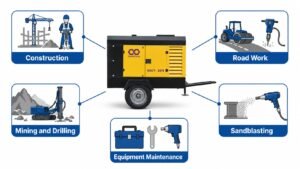
What Is the Best Air Compressor Brand for Construction?
Construction work often demands portability, durability, and sufficient airflow.
For contractors, DEWALT and Makita are worth considering for portable applications. For more demanding professional applications, Ingersoll Rand and other professional compressor manufacturers may be more appropriate.
When choosing a portable air compressor for construction, look beyond the brand and ask:
- How much CFM do my tools require?
- What PSI do they need?
- Will multiple tools run at the same time?
- Will the compressor run continuously?
- Do I need gasoline or diesel power?
- How easy is the compressor to transport?
- Can I get parts and service when needed?
Quincy recommends allowing a margin above the combined CFM requirement when multiple tools operate simultaneously.
What Is the Best Heavy-Duty Air Compressor Brand?
For heavy-duty applications, the most important factors are usually:
- Airflow
- Pressure
- Duty cycle
- Pump construction
- Cooling
- Serviceability
- Replacement parts
- Operating environment
- Total cost of ownership
Brands such as Ingersoll Rand and Quincy are commonly positioned toward professional and heavy-duty users. For true industrial continuous-duty applications, buyers may also need to consider industrial rotary-screw manufacturers such as Atlas Copco, Kaeser, and Sullair.
Don’t Choose an Air Compressor Based Only on Horsepower
Horsepower is one of the most commonly advertised specifications, but it should not be the only number you consider.
Your pneumatic tool’s required airflow is critical.
For example, a compressor with impressive horsepower but insufficient delivered CFM may still struggle with a tool that requires continuous airflow.
Before you buy, compare:
Tool requirement → CFM → working PSI → compressor output → duty cycle
This approach is much more useful than simply asking which brand has the highest horsepower.
CFM vs PSI: Which Matters More?
Both matter, but they describe different things.
CFM describes the volume of air the compressor can deliver.
PSI describes pressure.
Your tools determine how much of each you need.
For continuous-use pneumatic equipment, delivered airflow is especially important. Current compressor buying guidance consistently recommends matching compressor output to the actual requirements of the tools being used.
Should You Buy a Portable or Stationary Compressor?
Choose a portable compressor when you need to move equipment between locations.
A stationary compressor may be better when your compressor will remain in a garage, workshop, production area, or industrial facility.
Portable compressor advantages
- Easy to move
- Useful on construction sites
- Flexible placement
- Available in electric and engine-powered configurations
Stationary compressor advantages
- Larger tanks
- Higher output options
- Better suited to permanent workshops
- Suitable for demanding pneumatic equipment
Your application should determine which design makes sense.
Where Should You Buy an Air Compressor?
Once you’ve identified the type and specifications you need, you can compare available portable air compressors, professional compressors, and heavy-duty equipment based on price, specifications, and intended use.
If you’re shopping for equipment for construction, workshops, garages, or industrial applications, browse our selection of air compressors and compare the options available for your application.
How to Choose Between Air Compressor Brands
Instead of asking, “Which air compressor brand is the best?” ask:
Which brand and model provides the right combination of airflow, pressure, durability, portability, price, and service support for my work?
Use this checklist before buying:
For home use
Choose a compressor that is:
- Compact
- Easy to operate
- Affordable
- Suitable for your tools
- Quiet enough for your workspace
For garage use
Look for:
- Higher CFM
- Appropriate tank capacity
- Automotive tool compatibility
- Good recovery
- Convenient maintenance
For construction
Prioritize:
- Portability
- Durability
- Adequate CFM
- Suitable PSI
- Gas or diesel power when appropriate
- Rugged construction
For professional shops
Consider:
- High delivered CFM
- Duty cycle
- Two-stage compression where appropriate
- Service network
- Replacement parts
- Long-term operating costs
Final Thoughts: Which Air Compressor Brand Should You Buy?
The best air compressor brand in 2026 depends on what you need the machine to do.
DEWALT and Makita are strong brands to compare for portable contractor and job-site applications. California Air Tools is worth considering when quiet operation is important. Campbell Hausfeld can make sense for general home and DIY applications. For professional workshops and demanding applications, Ingersoll Rand and Quincy deserve a closer look.
Most importantly, don’t choose a compressor based only on brand reputation.
Check the CFM, PSI, tank size, duty cycle, power source, portability, noise, service support, and price before making your final decision.
The right compressor is the one that can comfortably handle your tools and workload without paying for capacity you don’t need.
For buyers ready to compare available equipment, you can shop air compressors for different applications and then match the specifications to your tools and workload.
Add comment