Best Air Compressor in 2026: A Complete Buying Guide for Home, Garage & Construction
Best Air Compressor in 2026: A Complete Buying Guide for Home, Garage & Construction
Finding the best air compressor in 2026 isn’t simply about choosing the biggest or most powerful machine. The right compressor depends on what you plan to do with it, how often you’ll use it, and where you’ll be working.
A homeowner may need a compact compressor for inflating tires and completing small DIY projects. A mechanic may need more airflow for pneumatic tools, while a contractor may need a powerful portable machine capable of handling demanding construction equipment.
If you’re searching for the best portable air compressor to buy in 2026, this guide will help you compare the most important features, understand different compressor types, and choose equipment that fits your work.
What Is the Best Air Compressor in 2026?
There isn’t one compressor that’s perfect for every application.
The best air compressor in 2026 is the one that provides enough airflow and pressure for your tools while fitting your workspace, workload, and budget.
Before you buy an air compressor, consider:
- What tools will you use?
- How much CFM do those tools require?
- What PSI do they need?
- Will you use the compressor indoors or outdoors?
- Do you need a portable machine?
- Will the compressor run occasionally or for several hours?
- Do you need electric, gas, or diesel power?
- How much are you comfortable spending?
Answering these questions will make it much easier to find the right compressor.
Best Portable Air Compressor for 2026
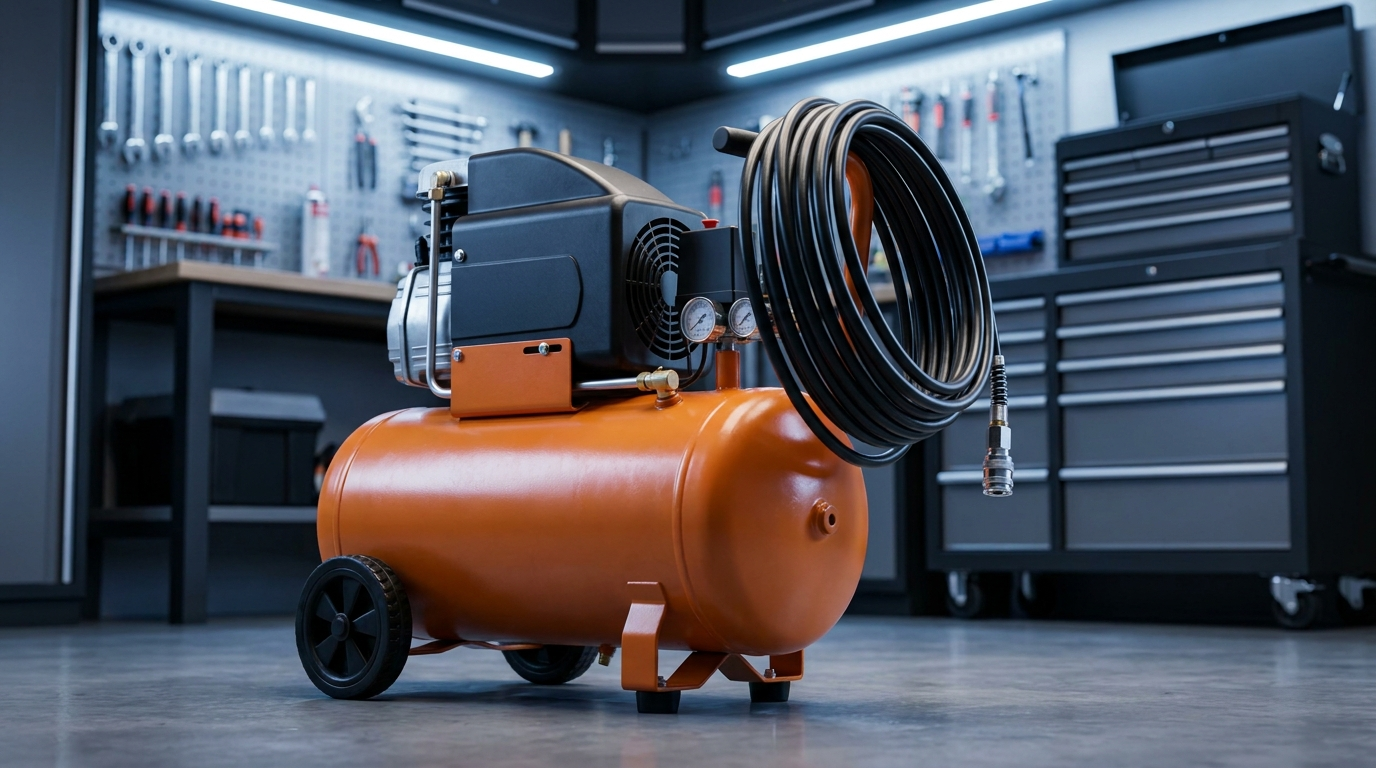
A portable air compressor is one of the most versatile choices because it can be moved between locations.
Portable compressors can be useful for:
- Construction projects
- Automotive repairs
- Workshops
- Home improvement
- Maintenance
- Pneumatic tools
- Tire inflation
- Outdoor projects
If you regularly move equipment between job sites, portability can be just as important as power.
When comparing a portable model, look at its CFM, PSI, weight, tank size, power source, wheels, handles, and overall construction.
If you’re ready to compare available models, you can browse portable air compressors designed for different applications.
browse portable air compressors
Best Air Compressor for Construction Work
Construction sites can require significantly more compressed air than typical household projects.
Contractors may use compressors for:
- Nail guns
- Impact wrenches
- Pneumatic drills
- Grinders
- Sanders
- Jackhammers
- Breakers
- Spray equipment
The best air compressor for construction work should provide enough airflow for the tools you plan to operate.
If you’re searching for a construction air compressor for sale, don’t choose based only on horsepower or tank size. Check the actual CFM and PSI requirements of your equipment.
For demanding jobs, a heavy duty air compressor for construction may be a better choice because it is designed for more intensive applications.
Best Air Compressor for a Home Garage
If you’re looking for the best air compressor for a home garage, start by identifying the tools you plan to use.
A garage compressor may be used for:
- Tire inflation
- Impact wrenches
- Air ratchets
- Nailers
- Cleaning
- Small spray-painting projects
- DIY repairs
A homeowner who only needs compressed air occasionally may not need a large industrial machine.
However, if you plan to operate pneumatic tools regularly, you should look for a compressor with enough CFM to keep up with those tools.
For garage owners, noise, available space, electrical requirements, and portability can also be important considerations.
Best Air Compressor for Home Use
The best air compressor for home use is usually one that is easy to operate, store, and maintain.
For simple jobs such as inflating tires, cleaning equipment, or using small nail guns, a compact portable compressor may be sufficient.
If you’re planning more demanding DIY projects, look for a model with additional airflow capacity.
The important thing is to avoid paying for a compressor that is significantly more powerful than you actually need.
Best Heavy Duty Air Compressor for Construction
For contractors and professionals, a heavy duty air compressor for construction can provide the capacity needed for more demanding work.
Heavy-duty compressors can be useful for:
- Construction companies
- Automotive shops
- Industrial facilities
- Equipment maintenance
- Road work
- Commercial workshops
When comparing a heavy-duty compressor, pay attention to:
- CFM
- PSI
- Duty cycle
- Engine or motor
- Tank capacity
- Cooling system
- Portability
- Maintenance requirements
A powerful compressor isn’t automatically the best option. It should provide the airflow your equipment actually requires.
Best Gas Powered Air Compressor for Construction
A gas powered air compressor can be a practical option for outdoor construction work, especially when electrical power isn’t readily available.
Gas compressors are useful when mobility and independence from electrical outlets are important.
When looking for the best gas powered air compressor for construction, compare:
- CFM output
- Maximum PSI
- Engine performance
- Fuel consumption
- Runtime
- Weight
- Portability
- Maintenance
A gas compressor can be particularly useful for contractors who move from one job site to another.
Best Diesel Air Compressor for Construction
A diesel air compressor may be appropriate for demanding commercial and industrial applications.
If you’re searching for a diesel air compressor for sale, compare the compressor’s airflow, operating pressure, engine specifications, fuel capacity, service requirements, and transportation options.
Diesel-powered equipment can be a good choice when the compressor is expected to work for extended periods in demanding environments.
Best Portable Air Compressor for Pneumatic Tools
Choosing the best portable air compressor for pneumatic tools requires looking closely at your tools’ airflow requirements.
Different tools consume different amounts of compressed air.
For example, a small nailer may require relatively little airflow, while a grinder, sander, or other continuous-use tool can require substantially more.
Before you buy, make a list of the pneumatic tools you intend to use and check their CFM requirements.
If multiple tools will operate at the same time, you’ll need to consider their combined airflow requirements.
Understanding CFM Before You Buy
CFM stands for cubic feet per minute and tells you how much air a compressor can deliver.
For many buyers, CFM is one of the most important specifications.
A compressor with a large tank but insufficient CFM may still struggle with a tool that requires continuous airflow.
When comparing air compressors for sale, check the compressor’s CFM at the PSI you expect to use.
It’s also smart to leave some additional capacity rather than choosing a compressor that operates at its maximum capability all the time.
Why PSI Matters
PSI stands for pounds per square inch and measures air pressure.
Your tools will have recommended operating pressures, so the compressor must be capable of meeting those requirements.
However, PSI should be considered together with CFM.
A compressor can have a high PSI rating but still not provide enough airflow for a demanding pneumatic tool.
That’s why you should always compare both specifications before you buy an air compressor.
Does Tank Size Matter?
Yes, but tank size isn’t everything.
The tank stores compressed air and can provide a reserve when the compressor isn’t actively producing enough air.
Larger tanks can be useful for applications involving intermittent bursts of air.
However, if you’re using a tool continuously, the compressor’s CFM output becomes especially important.
Don’t choose an air compressor simply because it has the biggest tank.
Electric vs. Gas vs. Diesel Air Compressors
The best power source depends on where you will use the compressor.
Electric Air Compressors
Electric compressors can be convenient for:
- Garages
- Workshops
- Indoor maintenance
- Home projects
- Facilities with reliable electrical power
They are often a practical choice when the compressor will remain in one location.
Gas Air Compressors
Gas compressors are useful when you need mobility and don’t have convenient access to electricity.
They’re particularly practical for outdoor work and construction sites.
Diesel Air Compressors
Diesel models can be suitable for demanding commercial, industrial, and construction applications where extended operation is required.
The right choice depends on your work environment rather than simply choosing the most powerful option.
Best Affordable Air Compressor
If you’re searching for the best affordable air compressor, start with your actual requirements.
There’s no reason to spend more for industrial-level capacity if you only need compressed air for basic home projects.
On the other hand, choosing the cheapest compressor available can become expensive if it doesn’t provide enough airflow for your tools.
When comparing an affordable air compressor, consider:
- CFM
- PSI
- Tank size
- Motor or engine
- Portability
- Build quality
- Maintenance
- Warranty
- Operating costs
The goal should be finding the best value rather than simply the lowest price.
How Much Does an Air Compressor Cost in 2026?
The air compressor price varies depending on the compressor’s size, power source, performance, construction, and intended application.
Small compressors for home use generally require a smaller investment than heavy-duty construction or industrial equipment.
When comparing the air compressor cost, remember to consider more than the purchase price.
Your total cost may also include:
- Electricity or fuel
- Maintenance
- Replacement parts
- Hoses
- Filters
- Oil
- Transportation
A slightly more expensive compressor may offer better value if it meets your needs and provides reliable long-term performance.
What Features Should You Look For?
When you’re ready to buy a portable air compressor, compare more than just price.
Adequate CFM
Make sure the compressor can provide enough airflow for your most demanding tool.
Suitable PSI
Check the pressure requirements of the equipment you’ll be using.
Portability
If you work at multiple locations, wheels, handles, or a towable design can make transportation easier.
Durable Construction
Construction and industrial applications can be demanding, so durability should be part of your decision.
Easy Maintenance
Look for equipment that allows convenient access to filters, drains, oil, and other maintenance points.
Hose Compatibility
An air compressor with hose can be convenient if you want equipment that is ready for use with compatible pneumatic tools.
Common Mistakes When Buying an Air Compressor
Choosing Only by Horsepower
Horsepower doesn’t tell the entire story. Always check CFM and PSI.
Choosing the Largest Tank
A large tank doesn’t automatically mean the compressor can provide continuous airflow.
Ignoring Your Tools
Your tools should determine the compressor requirements.
Buying Too Small
An underpowered compressor may run constantly and struggle to keep up with demanding equipment.
Buying More Than You Need
There’s no advantage to purchasing an expensive industrial machine if your applications only require a small portable compressor.
Ignoring Operating Costs
Fuel, electricity, maintenance, and replacement parts can affect the long-term cost of ownership.
Where to Buy Air Compressors in 2026
Once you’ve determined the type, CFM, PSI, tank size, and power source you need, you can start comparing models.
If you’re searching for air compressors for sale, focus on equipment that matches your actual application.
For construction professionals, look for compressors capable of handling demanding pneumatic tools. For homeowners and garage users, a smaller portable machine may be a better fit.
You can shop air compressors for different applications and compare the available options here:
If you’re not sure which type you need, start by identifying your tools and their CFM and PSI requirements. This will narrow your options considerably.
Best Air Compressor for the Money
The best air compressor for the money isn’t necessarily the cheapest model.
A good value compressor should provide the performance you need without paying for unnecessary capacity.
Think about how often you’ll use the machine.
If you’re a homeowner who uses compressed air occasionally, a compact compressor may provide excellent value.
If you’re a contractor using pneumatic tools every day, investing in a reliable heavy-duty compressor may save money over time by reducing downtime and avoiding the need to upgrade too soon.
Final Thoughts
The best air compressor in 2026 depends on your specific needs.
For home use, a compact portable compressor may be all you need. For garage work, you may want additional airflow for pneumatic tools. Construction professionals may benefit from a heavy-duty gas, diesel, or industrial portable compressor.
Before you buy, compare CFM, PSI, tank size, power source, portability, duty cycle, maintenance requirements, and operating costs.
If you’re ready to compare your options, you can explore air compressors for construction, garages, workshops, home projects, and other applications.
explore air compressors for different applications
Choosing the right compressor from the beginning can help you get better performance from your pneumatic tools, avoid unnecessary expenses, and find equipment that fits the way you actually work.
Add comment