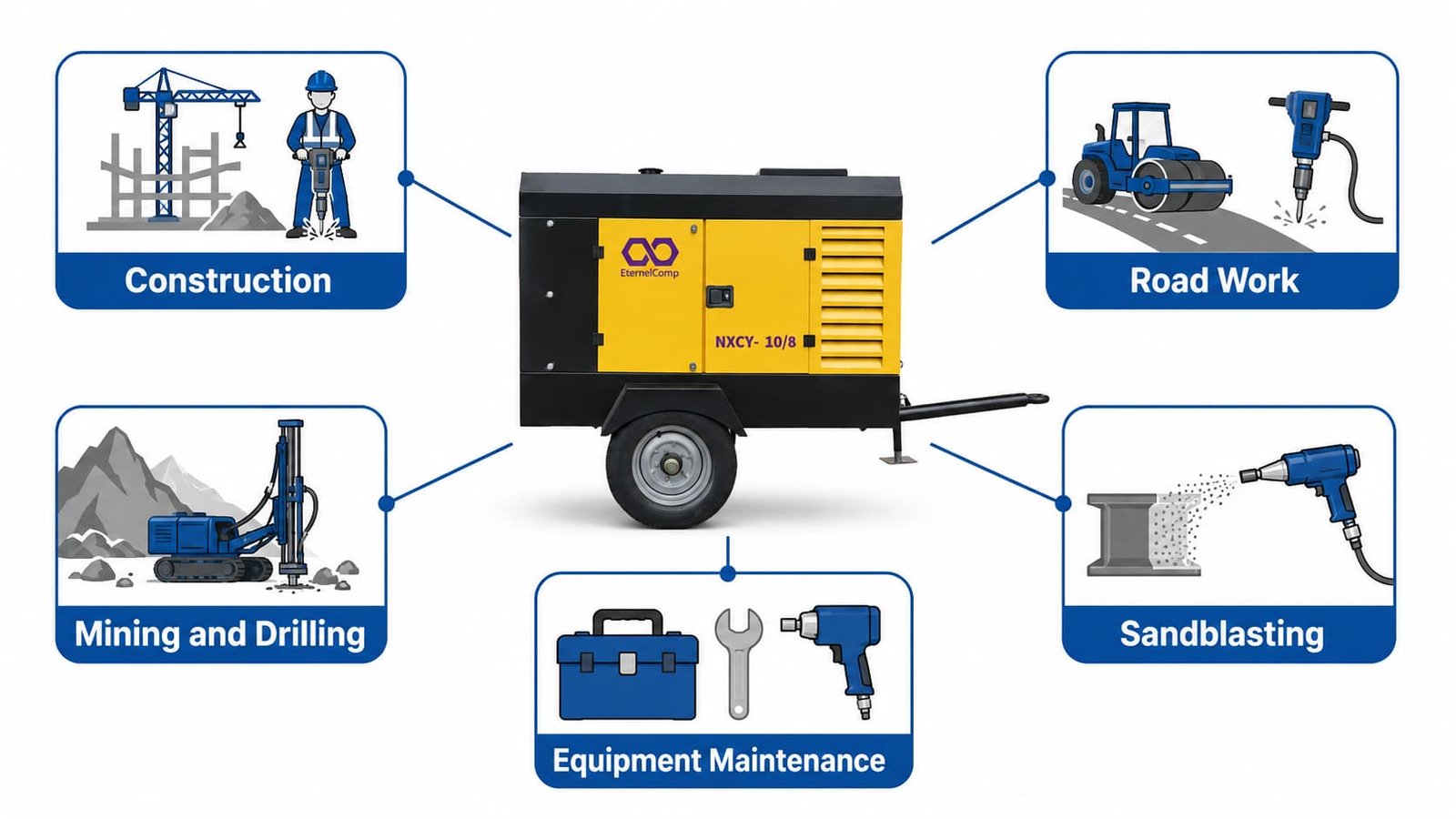
How to Choose a Portable Air Compressor for Construction
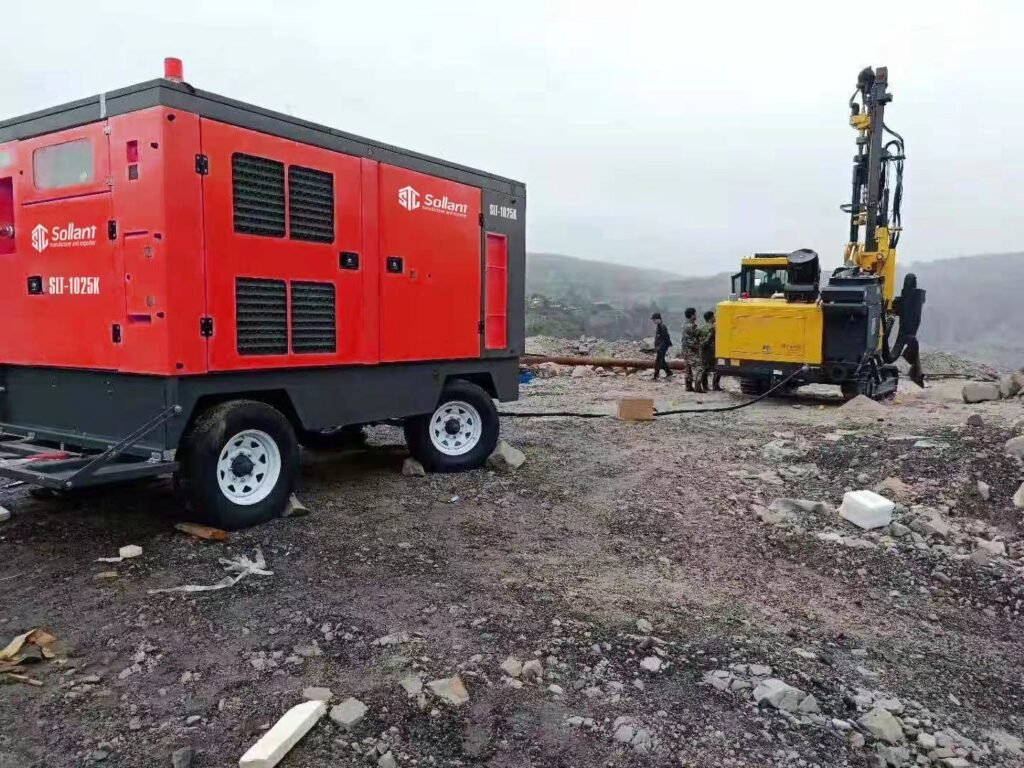
Choosing the right portable air compressor for construction can make a big difference in how efficiently you complete a job. Whether you need compressed air for nail guns, impact wrenches, jackhammers, grinders, sanders, or other pneumatic tools, the compressor needs to provide enough power for the work.
With so many options available, including gas, diesel, electric, and heavy-duty models, it can be difficult to know which one is right for your job.
In this guide, we’ll explain what to look for when choosing a portable air compressor for construction, including CFM, PSI, fuel type, tank size, portability, operating costs, and important features.
What Is a Portable Air Compressor for Construction?
A portable air compressor for construction is designed to provide compressed air at job sites where mobility and dependable performance are important.
Unlike small compressors designed primarily for home use, construction compressors are often built for demanding applications. Many models can power pneumatic tools for extended periods and are designed to operate in challenging job-site conditions.
When choosing a compressor, consider the tools you plan to operate, how often you will use the equipment, and whether the compressor needs to be transported between different job sites.
How Much CFM Do You Need?
One of the most important specifications to check is CFM, or cubic feet per minute.
CFM measures how much air a compressor can deliver. Different pneumatic tools require different amounts of airflow, so your compressor needs to provide enough CFM for the tool with the highest requirement.
For example, smaller pneumatic tools may work with a relatively low CFM output, while equipment such as jackhammers, sandblasters, and large grinders can require considerably more airflow.
If you plan to operate several pneumatic tools, choosing a compressor with additional CFM capacity can help prevent performance problems.
Don’t Forget About PSI
PSI, or pounds per square inch, measures air pressure.
Most pneumatic tools have a recommended PSI range. Before buying a compressor, check the requirements for the tools you plan to use.
A compressor may have a high PSI rating but still fail to provide enough CFM for a demanding application. That’s why you should always consider both PSI and CFM when comparing compressors.
Gas vs. Diesel Portable Air Compressors
Fuel type is another important consideration when choosing construction equipment.
Portable Gas Air Compressors
A portable gas air compressor can be a practical choice for contractors who need mobility and don’t always have access to electrical power.
Gas-powered models are commonly used for outdoor construction projects, maintenance work, framing, roofing, and other applications where portability is important.
If you’re looking for a gas powered air compressor, consider the compressor’s CFM output, engine size, fuel consumption, and overall weight.
Portable Diesel Air Compressors
A portable diesel air compressor can be a good option for demanding commercial and industrial applications.
Diesel engines are commonly selected for heavy-duty applications where the compressor may need to operate for long periods.
When shopping for a diesel air compressor for sale, pay attention to airflow, engine performance, fuel capacity, maintenance requirements, and transportation options.
Choose the Right Compressor Size
Bigger isn’t always better.
A compressor that’s too small may struggle to keep up with your tools, while a compressor that’s significantly larger than necessary can increase purchase, transportation, and operating costs.
Start by identifying the pneumatic tools you plan to use. Look at their CFM and PSI requirements and then select a compressor capable of meeting those demands.
If your construction work involves several air-powered tools, consider choosing a model with extra airflow capacity.
When Should You Choose a Heavy-Duty Air Compressor?
A heavy duty air compressor is worth considering when your work requires consistent airflow, long operating periods, or demanding pneumatic tools.
Heavy-duty compressors can be useful for construction contractors, industrial operations, road work, equipment maintenance, and other applications where reliability is important.
If your job requires a compressor to run frequently throughout the day, an air compressor heavy duty model may provide the performance and durability you need.
For contractors comparing different equipment options, you can also explore our selection of heavy-duty and portable compressors to find a model that matches your application.
explore our selection of heavy-duty and portable compressors
Tank Size: Does It Matter?
Tank size can affect how the compressor operates, but it shouldn’t be the only factor you consider.
A larger tank stores more compressed air, which can be useful when a tool requires short bursts of high airflow. However, the compressor’s actual CFM output is still extremely important for tools that require continuous airflow.
For construction applications, focus on the combination of:
- CFM
- PSI
- Tank capacity
- Motor or engine power
- Duty cycle
- Portability
This will give you a better idea of whether the compressor is suitable for your work.
Portability Matters on a Construction Site
Construction projects often require equipment to be moved around the job site or transported to different locations.
Look for features that make transportation easier, such as:
- Wheels or pneumatic tires
- Strong handles
- Towable designs
- Compact construction
- Easy-access controls
- Durable frames
A compressor can have excellent specifications, but if it is difficult to move, it may not be practical for your job.
Should You Buy a Gas, Diesel, or Electric Compressor?
The right fuel type depends largely on where and how you plan to use the compressor.
Gas compressors can be useful for outdoor construction sites where electricity isn’t readily available.
Diesel compressors are often better suited to demanding commercial and industrial applications where extended operation is required.
Electric compressors can be convenient for workshops, garages, and construction environments with dependable electrical power.
Think about your typical job site before deciding which type to purchase.
What About an Air Compressor Generator?
Some portable machines combine compressed-air equipment with generator capabilities.
A portable air compressor generator can be useful when a job site requires both compressed air and electrical power.
This type of equipment may help reduce the amount of separate machinery that needs to be transported to a site.
However, combination machines can be more expensive and may have different maintenance requirements, so compare the specifications carefully before buying.
Portable Air Compressor Price and Operating Costs
Price is naturally an important part of the buying decision.
The portable air compressor price can vary considerably depending on the compressor’s size, engine, airflow, pressure, construction, and features.
Instead of choosing the cheapest compressor available, consider the total cost of ownership.
Look at:
- Purchase price
- Fuel consumption
- Maintenance
- Replacement parts
- Transportation
- Expected service life
- Warranty coverage
You may find discount air compressors or an affordable air compressor that meets your requirements without paying for features you don’t need.
What Features Should You Look For?
When comparing portable air compressors for sale, consider more than just the price.
Useful features can include:
Easy Transportation
Wheels, handles, trailers, and compact designs can make moving the compressor easier.
Reliable Engine
For gas and diesel models, look at engine quality, fuel efficiency, and maintenance requirements.
Adequate CFM
Make sure the compressor provides enough airflow for your most demanding pneumatic tool.
Suitable PSI
The compressor should meet or exceed the pressure requirements of your equipment.
Air Compressor With Hose
An air compressor with hose can be convenient because you may not need to purchase compatible hoses separately.
Durable Construction
Construction environments can be demanding. A durable frame and quality components can help the equipment withstand regular job-site use.
Common Mistakes to Avoid
Choosing Too Little CFM
One of the most common mistakes is buying a compressor that doesn’t produce enough airflow for the tools being used.
Ignoring PSI Requirements
Always check the recommended pressure requirements for your pneumatic tools.
Buying More Compressor Than You Need
A large industrial compressor may not be necessary for every contractor. Choose equipment based on your actual applications.
Forgetting About Maintenance
Every compressor requires maintenance. Follow the manufacturer’s recommendations for oil changes, filters, belts, hoses, and other components.
Ignoring Job-Site Conditions
Consider temperature, dust, weather, terrain, available power, and transportation before selecting your equipment.
Where to Buy a Portable Air Compressor for Construction
Once you know the CFM, PSI, fuel type, and size you need, it’s time to compare available models.
If you’re looking to buy a portable air compressor, compare models based on performance, reliability, portability, and overall value rather than focusing only on the lowest price.
You can browse our portable air compressors and compressed-air equipment to compare available options for construction, workshops, automotive work, and other applications.
browse our portable air compressors and compressed-air equipment
Whether you’re looking for a portable gas air compressor, portable diesel air compressor, heavy-duty equipment, or another type of compressor, choosing the right specifications will help you get better performance from your investment.
Final Thoughts
Choosing the right portable air compressor for construction starts with understanding your actual work requirements.
Pay close attention to CFM and PSI, then consider fuel type, compressor size, tank capacity, portability, durability, maintenance, and operating costs.
For demanding applications, a heavy-duty or industrial portable air compressor may be the better choice. For smaller construction projects, a compact gas or electric model may provide everything you need.
Before making a purchase, compare your pneumatic tools’ requirements with the compressor’s specifications. Taking a little extra time to choose the right machine can help you avoid performance problems and unnecessary costs.
If you’re ready to compare models, view our available portable air compressors and find an option suited to your job-site needs.

Add comment